But isn’t garden waste harmless?
Being involved with this woodland project has been and continues to be a huge learning curve for me! This week I’ve been learning more about the impact of green waste and organic matter…
The headline message to us all is :
Please don’t dump garden waste in the woodland.
It might seem harmless (it did to me). A bag of grass cuttings, a few hedge trimmings, an unwanted plant or a pile of garden cuttings may look like perfectly natural material, but garden waste is not good for an ancient woodland, and there is a very good ecological reason why.
The woodland already has its own natural recycling system which has evolved over a long period of time. Leaves fall, dead branches return nutrients to the soil, fallen trees slowly decay. Fungi, insects, bacteria and countless other organisms break everything down and return it to the woodland ecosystem.
When we introduce material in from our gardens, we are bringing plants, seeds, roots, diseases and nutrients that don’t naturally belong there. A pile of garden waste can become much more than an untidy heap because it can change the delicate balance of the woodland floor in two potentially disastrous ways.
- One of the biggest concerns is invasive, non-native plants– INNS
Some garden plants are exceptionally good at surviving and spreading once they get into the countryside. They can outcompete the native plants that belong in our woodland, forming dense patches and reducing the diversity of woodland flowers and other ground vegetation.
Native plants have evolved to support a balanced and diverse ecosystem, offering nectar, pollen and food for numerous native bees, butterflies, birds, mammals and more. While they might look pretty, many non-native plants are nowhere near as good as supporting a healthy diverse ecosystem such as an ancient woodland, as well as creating direct problems, and this has a knock-on effect on the overall quality of life in the wood.
We are already dealing with invasive and non-native plants here, including Japanese knotweed, crocosmia, variegated archangel, Spanish bluebell, three cornered garlic, and cotoneaster. Natural Resources Wales specifically identifies invasive plants as a threat to native woodland flora, with plants such as Japanese knotweed capable of forming dense stands that exclude other vegetation and Spanish bluebells outcompeting our native bluebell for essential resources and interbreeding to dilute their unique genetic identity.
Once a garden plant becomes established in a woodland, removing it can be extremely difficult, expensive and sometimes take many years. Japanese knotweed is a particularly important example: Natural Resources Wales guidance specifically excludes Japanese knotweed and other invasive plants from material that can qualify as compost!
- Nutrient dense smothering
Sounds like a horror film but, garden waste can form thick, damp layers over the natural vegetation. Grass cuttings, hedge trimmings, compost and other garden material can introduce extra nutrients and organic matter into places where they don’t naturally occur, favouring vigorous plants and weeds at the expense of the delicate woodland ground flora we are trying to protect.
Natural Resources Wales identifies nutrient enrichment, soil disturbance and the proximity of residential gardens as factors that can increase the risk of non-native plants invading ancient woodland.
In an ancient woodland, small changes can have surprisingly large consequences.
It isn’t just the plants that are a problem!
Garden waste can also contain things that are easily overlooked:
- Plastic pots and labels
- Compost bags and string
- Soil from another location
- Seeds and plant fragments
- Pests and plant diseases
- Garden chemicals or contaminated material
- Roots and cuttings capable of producing new plants
What looks like one harmless garden clearance can therefore introduce a whole collection of problems into a fragile natural habitat.
And clearing it up isn’t simple either. Because this is an SSSI, we have a responsibility to manage the woodland carefully and protect the features for which it is designated. We have made some progress so far. With the help of a great team of volunteers, we have completed the first treatment of Japanese knotweed, dug up hundreds of crocosmia corms and chopped back a great deal of cotoneaster. But it’s an ongoing battle.
Help us keep this woodland special.
Our ancient woodland has its own natural gardening system, and it has been working for centuries. Let’s give it a helping hand by allowing it to remain as natural as possible.
Thank you for helping us look after this very special woodland and for helping us keep it wild.
Invasive Species List
All the following plants that we have in Hook Wood are listed Schedule 9, Part 2 of the Wildlife and Countryside Act 1981, which means that these plants are non-native invasive threats to the ecosystems, economy, or environment of Great Britain. They all are highly damaging to ancient woodlands because they behave as aggressive, invasive, non-native species that disrupt the fragile, hundreds-of-years-old ecosystem.
Cotoneaster, Cotoneaster horizontalis
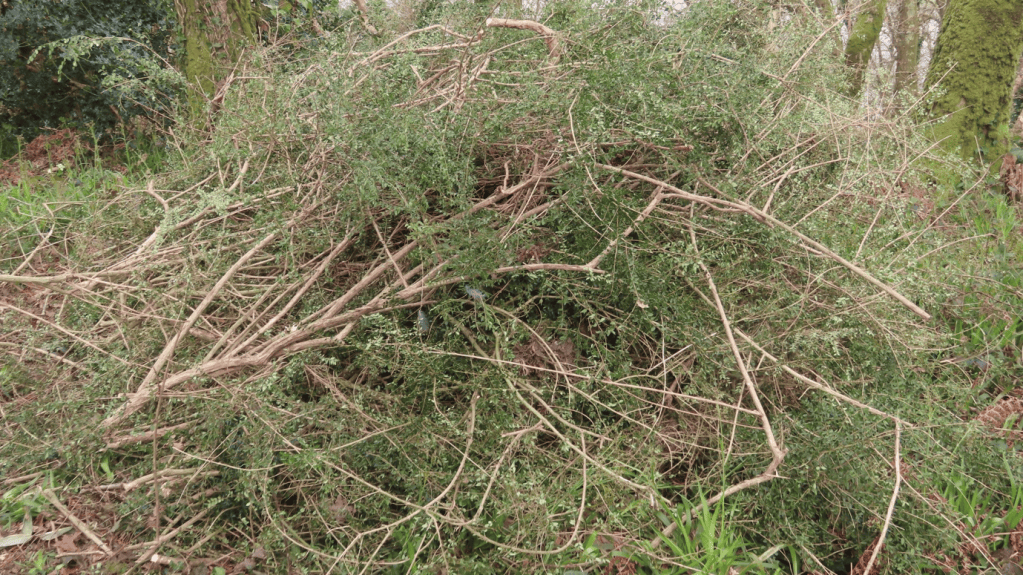
Cotoneaster forms a monoculture that completely smothers the woodland floor. It blocks out crucial sunlight, outcompeting rare native plants, woodland wildflowers (like bluebells or wood anemones), and unique ground-level lichen communities. As it dominates the lower canopy and ground layer, cotoneaster locks up the space needed for native tree saplings to sprout and grow, Cotoneaster develops extensive, deep root systems that are incredibly difficult to eradicate.
Three-cornered garlic / leek, Allium triquetrum
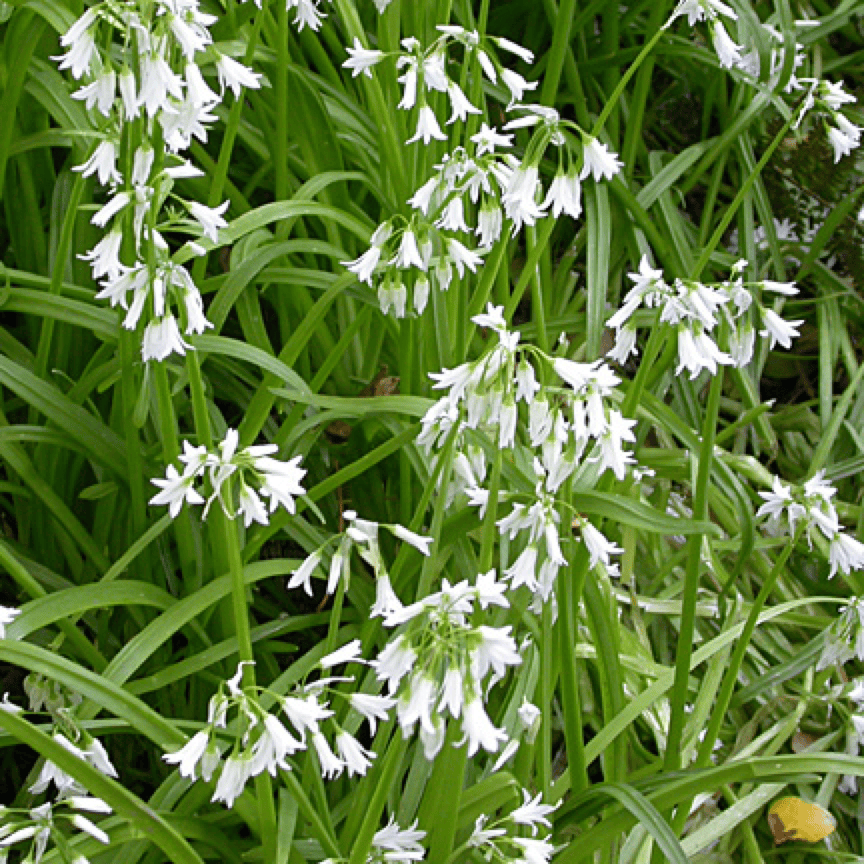
Three cornered garlic forms dense carpets. It grows rapidly and forms thick, dominant colonies that block sunlight and exhaust vital nutrients from the soil. It outcompetes natives, crowding out slow-growing native ancient woodland species like bluebells, primroses, and anemones. The dense mats it forms can stop tree seedlings and over-story vegetation from naturally regenerating. And it is hard to remove as it spreads aggressively via seeds (often carried by ants) and underground bulbs, meaning even small broken fragments left behind will regrow.
Spanish Bluebell, Hyacinthoides hispanica
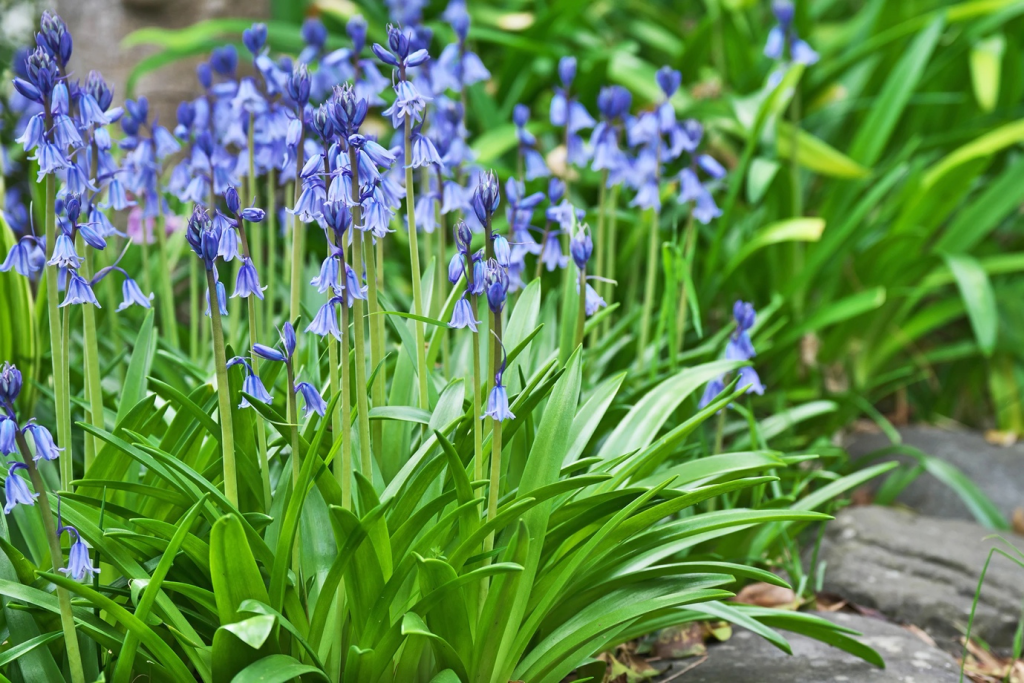
Spanish bluebell threatens the survival and genetic purity of the native British bluebell. Native bluebells act as a vital indicator species. The Spanish variety disrupts this environment in two major ways: 1. Genetic Pollution Through Hybridisation. 2. Aggressive Competition for Resources. They multiply quickly through both seeds and underground bulbs. This makes them very difficult to control once they escape from nearby gardens into wild areas.
Crocosmia / Montbretia
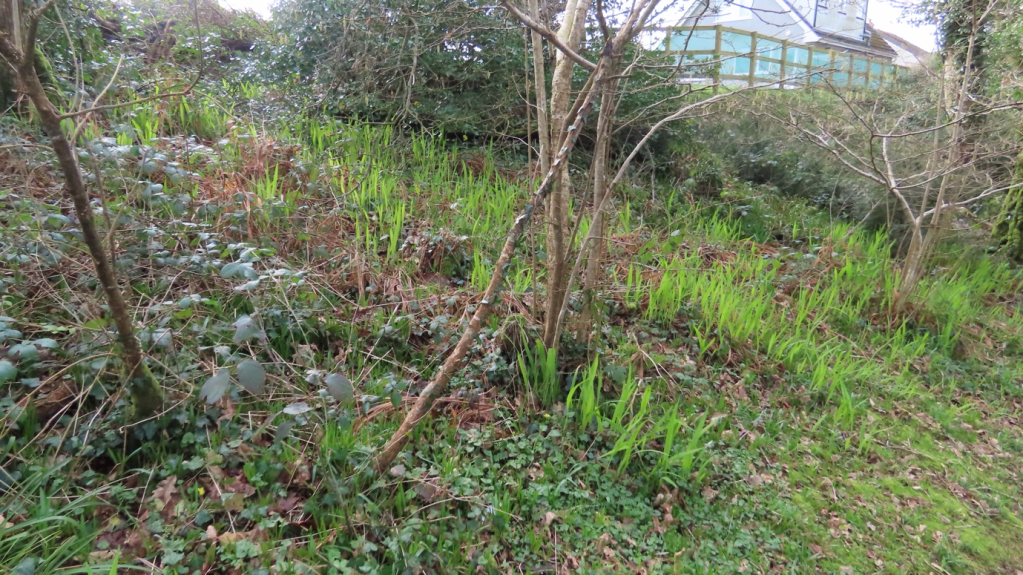
Crocosmia, also known as Montbretia smothers native ground flora by forming massive, congested underground mats of corms (bulbs) and dense surface foliage that physically choke and crowd out delicate native species. It suppresses woodland regeneration by blocking light and preventing native tree and shrub seedlings from germinating, halting the natural cycle of the woodland. It provides Zero Value to Local Wildlife. Unlike native plants, Montbretia does not support the breeding cycles of native UK insects, caterpillars, butterflies, or moths. As it replaces native flora, the local food web degrades. The plant is highly resistant to pests, diseases, and grazing by local wildlife meaning it faces no natural checks to its growth in the wild. And it is virtually impossible to eradicate.
Variegated Archangel, Lamium galeobdolon subsp. argentatum
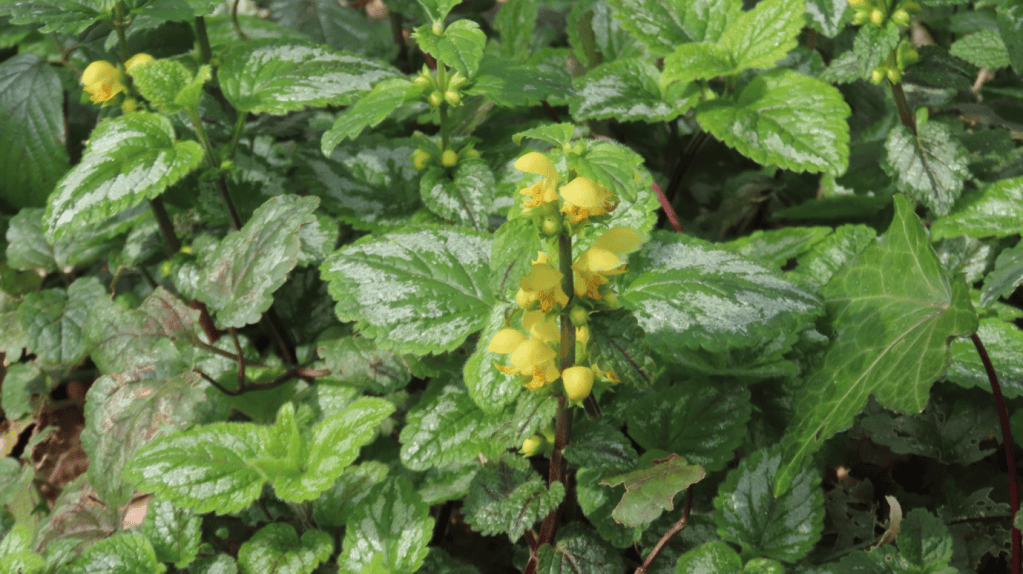
Variegated archangel has rapid growth. It spreads quickly through runners (stolons) and can grow up to 2 lateral meters in a single season. It smothers native species by forming thick mats that block light and space, displacing delicate native ancient woodland indicators like bluebells, wood anemones, and primroses. And is very hard to remove: Small pieces of broken stem or root left behind during manual pulling can easily re-root and start new patches.
Japanese Knotweed, Fallopia japonica
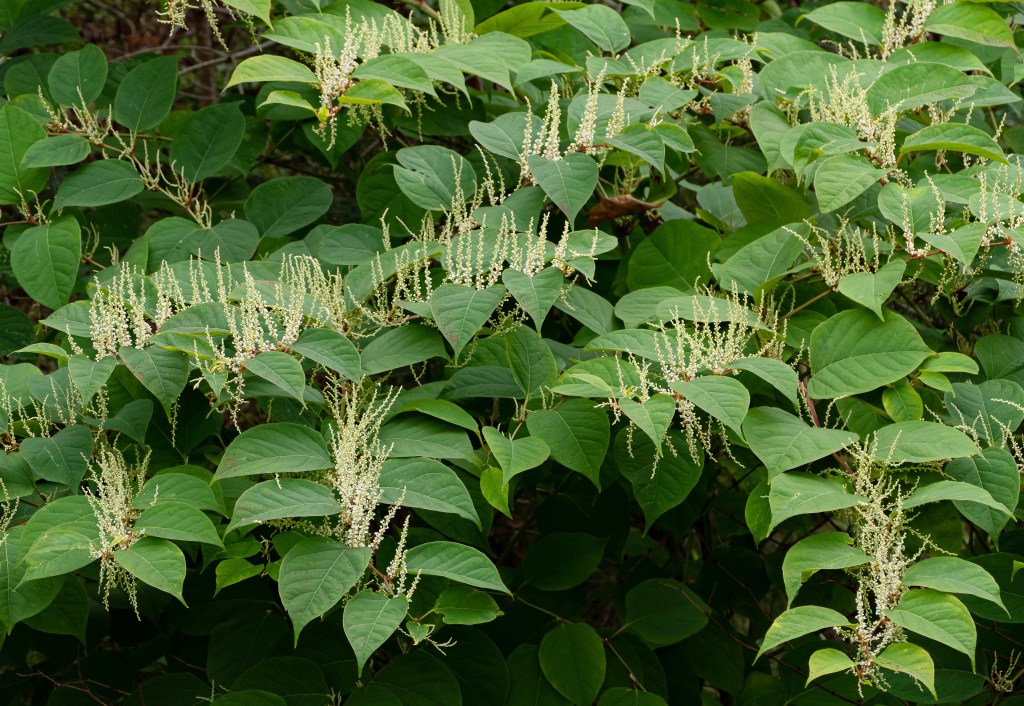
Japanese knotweed smothers Unique Ground Flora, Halts Tree Regeneration (The “Death of the Canopy”) and creates a “Food Desert” for Wildlife.


Leave a comment